
Poetics of the object in dance in Postmodernity: the neobaroque taste and new productions of meaning
Keywords:
Postmodern dance, neo-baroque, object, bio-object, meaning productionAbstract
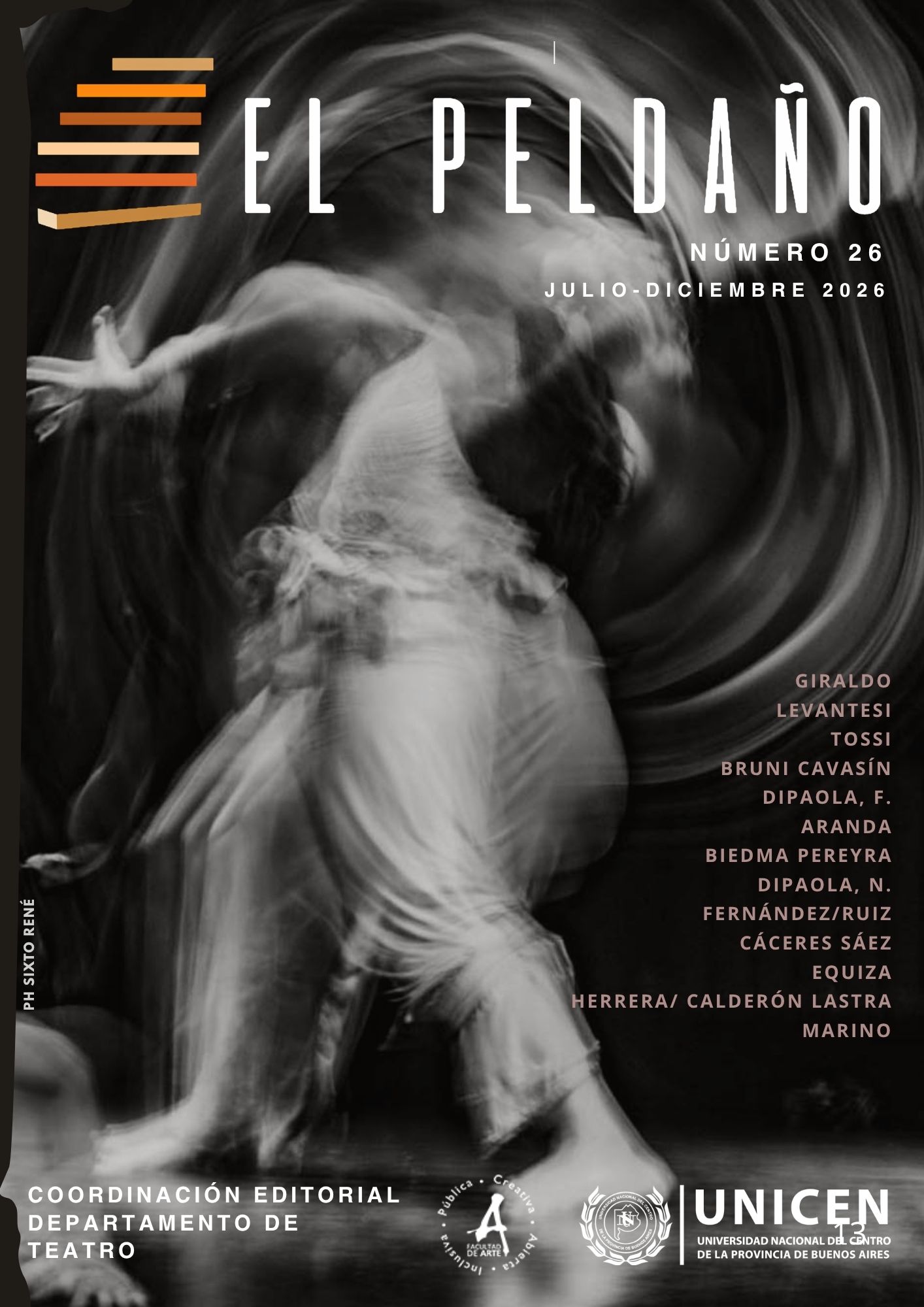
This article analyzes the transformations in dance during the 1970s and 1980s stemming from the incorporation of objects. It argues that the bond between object and subject not only illustrates a Neo-Baroque sensibility but also reformulates the production of meaning and contemporary dramaturgy. Through an interdisciplinary approach articulating O. Calabrese, T. Kantor, A. Alvarado and E. Verón, the study examines works by L. Childs, P. Bausch, M. Ek, and M. Marin. It concludes that the body-object interaction enables meta-enunciative operations. These allow the body to explore its own constitutive categories through a hybrid writing situated between the inert and the living, consolidating new scenic poetics.
References
Alvarado, A. (2005). Cosidad versus carnalidad: Cuerpo y objeto en el teatro. Telón de fondo. Revista de Teoría y Crítica Teatral, (2).
Alvarado, A. (2009). El Objeto de las Vanguardias del siglo XX en el Teatro Argentino de la Post-dictadura. En J. Dubatti (Comp.), Escritos sobre TEATRO II. Nueva Generación.
Alvarado, A. (2015). Teatro de objetos: manual dramatúrgico. Editorial INTeatro.
Banes, S. (1994). Writing Dancing in the Age of Postmodernism. Wesleyan University Press.
Baudrillard, J. (2007). La sociedad de consumo. Siglo XXI.
Bentivoglio, L. (1985). La danza contemporánea. Longanesi.
Calabrese, O. (1994). La era Neobarroca. Cátedra.
Genette, G. (1997). La obra del arte. Lumen.
Jameson, F. (1991). Ensayos sobre el posmodernismo. Imago Mundi.
Jost, F. (2013). El culto de lo banal. En J. Aumont (Ed.), La imagen. Paidós.
Kantor, T. (2004). El teatro de la muerte (Comp. D. Bablet). Ediciones de la Flor. (Actualizado según cita en texto).
Kauffman, L. S. (1998). Bad Girls and Sick Boys: Fantasies in Contemporary Art and Culture. University of California Press.
Koldobsky, D. (Dir.). (2007-2008). Definiciones Estéticas y Semióticas del fenómeno llamado danza-teatro [Proyecto de investigación]. UNA.
Levantesi, C. E. (2020). Los objetos en la danza a partir de las vanguardias artísticas de principios del siglo XX. Telondefondo. Revista De Teoría Y Crítica Teatral, (32), 155-166. https://doi.org/10.34096/tdf.n32.8461
Levantesi, C. & Brandolino, F. (2013). La danza teatro: condición de mixtura y combinatoria. Telón de fondo. Revista de Teoría y Crítica Teatral (17), 1-9.
Lipovetsky, G. & Serroy, J. (2015). La estetización del Mundo. Anagrama.
Lyotard, J.-F. (1987). La condición posmoderna. Cátedra.
Vattimo, G. (1996). El fin de la modernidad. Gedisa.
Verón, E. (1987). El cuerpo reencontrado. En La semiosis social. Gedisa.
Published
Versions
- 2026-07-20 (2)
- 2026-07-02 (1)
How to Cite
Issue
Section
License
Copyright (c) 2026 The Step. Notebook of Theatre StudiesAs part of its self-archiving policy, the journal's editorial team retains the version of the article that has been corrected and published on the platform for preservation or subsequent use in institutional repositories, virtual archives, or other linked publication venues.
This journal is licensed under a Creative Commons Attribution-NonCommercial-ShareAlike 4.0 International License.
Creative Commons License
This means that the original author of the content holds the economic rights. By publishing under a Creative Commons BY-NC-SA license, authors retain ownership of their rights while granting the journal a license to publish their work under these conditions; they also allow third parties to share and adapt the work for non-commercial purposes, provided that authorship is attributed and derivative works are shared under the same license.
Understanding the CC BY-NC-SA License
BY (Attribution): Users must give credit to the author or original source.
NC (Non-Commercial): Users may not use the work or its derivatives for commercial purposes.
SA (ShareAlike): If users modify or adapt the work, they must distribute their contributions under the same CC BY-NC-SA license or a compatible one.