
MIENTRAS EL PROPÓSITO DE LA HISTORIA ES NARRAR LO QUE SUCEDIÓ, EL PROPÓSTICO DEL TEATRO ES MOSTRAR LO QUE SUCEDE SIEMPRE
Mújeres públicas en escena
Abstract
El siguiente artículo analiza la relación entre el Teatro y la historia a través de la puesta en escena de una investigación académica sobre la prostitución femenina en el Tandil (Bs.As.) del siglo XIX y XX . El registro histórico y el “hecho teatral” , elaboran un entramado significativo de las formas de construcción de un Relato, como objeto de estudio, que se apropia de la “Verdad”, como experiencia, que convence, conmueve y devuelve una identificación necesaria. Las mujeres representan en este plano, un tiempo inacabado que el teatro persiste en revivir con conciencia social.
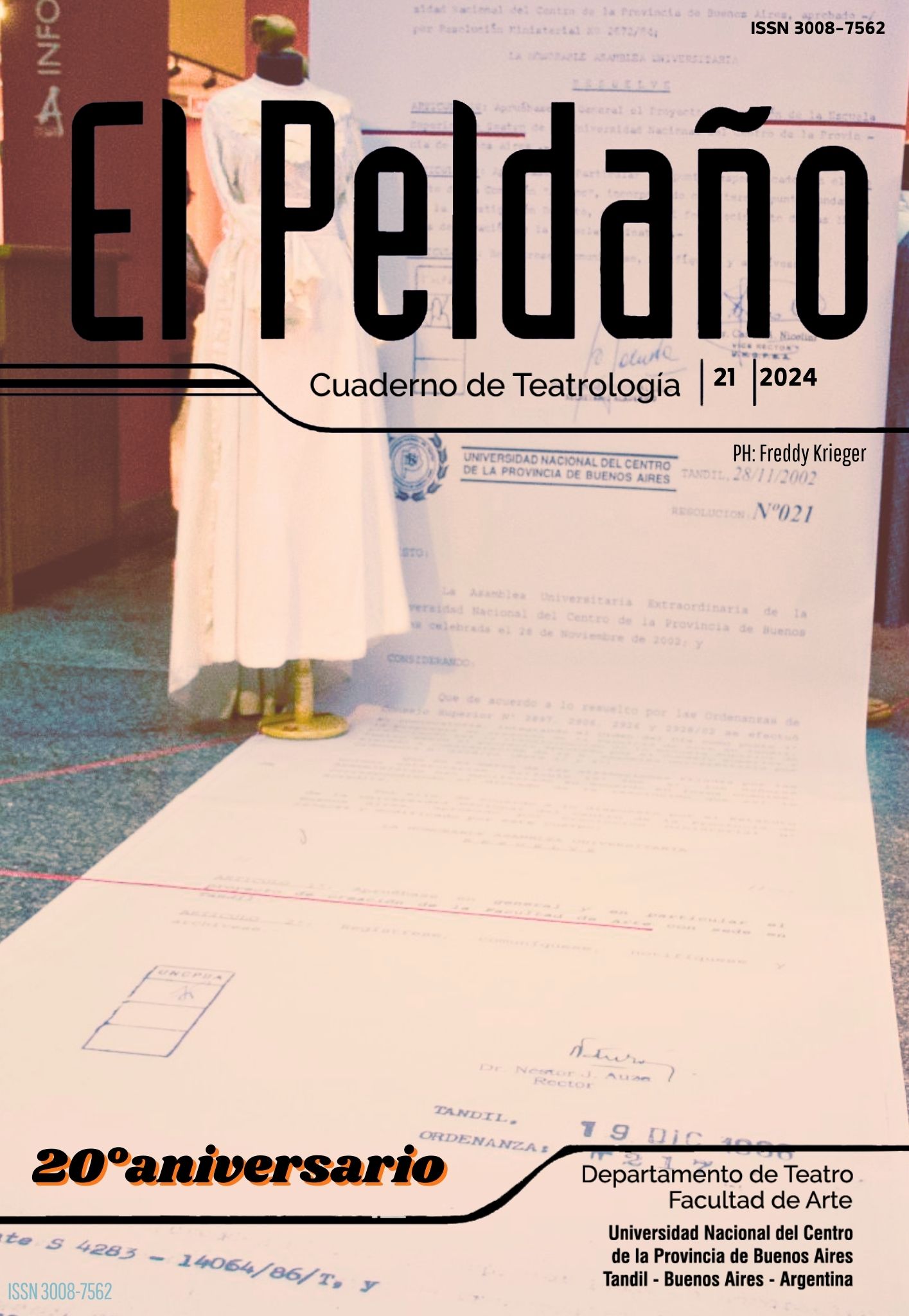
Published
2024-01-02
How to Cite
Carreño, K. (2024). MIENTRAS EL PROPÓSITO DE LA HISTORIA ES NARRAR LO QUE SUCEDIÓ, EL PROPÓSTICO DEL TEATRO ES MOSTRAR LO QUE SUCEDE SIEMPRE: Mújeres públicas en escena. The Step. Notebook of Theatre Studies, 1(21). Retrieved from https://www.ojs.arte.unicen.edu.ar/index.php/elpeldano/article/view/1199
Issue
Section
Artículos
License
As part of its self-archiving policy, the journal's editorial team retains the version of the article that has been corrected and published on the platform for preservation or subsequent use in institutional repositories, virtual archives, or other linked publication venues.

This journal is licensed under a Creative Commons Attribution-NonCommercial-ShareAlike 4.0 International License.

Creative Commons License

This means that the original author of the content holds the economic rights. By publishing under a Creative Commons BY-NC-SA license, authors retain ownership of their rights while granting the journal a license to publish their work under these conditions; they also allow third parties to share and adapt the work for non-commercial purposes, provided that authorship is attributed and derivative works are shared under the same license.

Understanding the CC BY-NC-SA License
BY (Attribution): Users must give credit to the author or original source.

NC (Non-Commercial): Users may not use the work or its derivatives for commercial purposes.

SA (ShareAlike): If users modify or adapt the work, they must distribute their contributions under the same CC BY-NC-SA license or a compatible one.