Perspectiva corporizada del conocimiento rítmico
Abstract
Resumen: El ritmo constituye una problemática relevante en el universo teatral, de la danza y del movimiento, que ha sido abordada y estudiada por amplio número de especialistas (artistas, pedagogas/os, pensadoras/es, etc.) exponiendo distintos paradigmas.
El presente artículo intenta superar la frecuente disposición a servirse del conocimiento musical anclando en el ritmo como fluir o rhuthmos, el cual se manifiesta en el devenir del movimiento con diversidad de modos y formas que pueden albergar la medida y lo proporcional, pero también otras peculiaridades. Avanza luego, retomando un estudio elemental desarrollado en el marco de un trabajo de entrenamiento rítmico para la escena con principiantes en formación. Investigando a través de la práctica, el fluir del ritmo que se manifiesta en el cuerpo y el movimiento como vivencia rítmica, va siendo objeto de sistematización entrelazando práctica y teoría multidisciplinar, aportando otredad de nociones y conceptos para redimensionar el ritmo desde el cuerpo moviente.
Tarea compleja y por esta misma razón fascinante con la que se busca contribuir al hacer/pensar sobre el ritmo especialmente en las artes escénicas.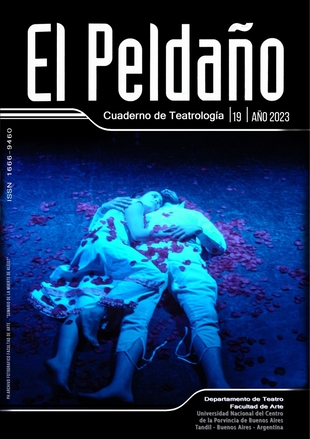
Published
How to Cite
Issue
Section
License
As part of its self-archiving policy, the journal's editorial team retains the version of the article that has been corrected and published on the platform for preservation or subsequent use in institutional repositories, virtual archives, or other linked publication venues.

This journal is licensed under a Creative Commons Attribution-NonCommercial-ShareAlike 4.0 International License.

Creative Commons License

This means that the original author of the content holds the economic rights. By publishing under a Creative Commons BY-NC-SA license, authors retain ownership of their rights while granting the journal a license to publish their work under these conditions; they also allow third parties to share and adapt the work for non-commercial purposes, provided that authorship is attributed and derivative works are shared under the same license.

Understanding the CC BY-NC-SA License
BY (Attribution): Users must give credit to the author or original source.

NC (Non-Commercial): Users may not use the work or its derivatives for commercial purposes.

SA (ShareAlike): If users modify or adapt the work, they must distribute their contributions under the same CC BY-NC-SA license or a compatible one.